Plastic Free July: a practical guide to reducing plastic waste in your business


Every July, thousands of businesses take part in Plastic Free July. It’s a great opportunity to step back and look at how plastic is used across your organisation.

For many businesses, plastic has simply become part of everyday operations. It arrives with deliveries, protects products, keeps food fresh, helps maintain hygiene and makes transportation easier. In many cases, it’s doing exactly the job it was designed to do.

The question isn’t whether plastic should exist in your business.

The better question is whether you’re using more than you need to.

At Circulai, we’ve spent years helping organisations understand their waste. One thing we’ve learned is that the biggest opportunities don’t usually come from making dramatic changes. They come from taking a closer look at everyday processes and asking a few simple questions.

Where does plastic come from?

How is it being used?

What happens to it when it’s no longer needed?

Once you understand that journey, you can begin making more informed decisions about reducing, replacing, or recycling plastic.

Start by understanding your plastic.

If someone asked you how much plastic enters your business every week, could you answer?

For many organisations, the answer is probably no.

That’s not because people don’t care. It’s because plastic arrives in so many ways that it often goes unnoticed.

Think about a typical working day.

A delivery arrives wrapped in stretch film.

Products are protected with bubble wrap or plastic packaging.

Staff buy bottled drinks at lunchtime.

Disposable food containers appear in kitchen bins.

Cleaning products, office supplies and washroom consumables all contain plastic in one form or another.

None of these items, individually, seems significant.

Together, they can account for a substantial amount of waste over the course of a year.

Look beyond the bin

Reducing plastic waste isn’t just about what goes into the recycling bin.

It’s about understanding the decisions that created that waste in the first place.

For example:

• Could suppliers reduce unnecessary packaging?

• Are reusable alternatives available for everyday items?

• Are recyclable plastics ending up in general waste because bins aren’t clearly labelled?

Are staff aware of what can and can’t be recycled?

Sometimes the solution is changing a product.

Sometimes it’s changing a process.

Often, it’s simply making it easier for people to do the right thing.

Small changes really do make a difference.

One of the biggest misconceptions about sustainability is that every improvement has to be large and expensive.

The opposite is often true.

We’ve seen businesses achieve significant reductions in waste simply by making a series of small improvements over time.

That might include:

• Introducing refillable water stations instead of bottled water.

• Working with suppliers to reduce excess packaging.

• Replacing disposable catering items where practical.

• Improving recycling facilities around the workplace.

• Helping staff understand how to separate different waste streams.

None of these changes is revolutionary.

They’re practical.

And when they’re introduced consistently, they can make a noticeable difference to both waste volumes and costs.

Good waste management starts with good information.

Before making changes, it’s important to understand what you’re dealing with.

Good waste data helps businesses identify where plastic waste is generated, how it’s managed, and where improvements can be made.

Rather than relying on assumptions, you can base your decisions on evidence.

That means focusing your time and investment where it will have the greatest impact.

For some businesses, that might be reducing packaging.

For others, it could be improving recycling rates or working more closely with suppliers.

Every organisation is different, which is why understanding your own waste is always the best place to start.

Make Plastic Free July the beginning, not the end.

Plastic Free July isn’t about removing every piece of plastic from your business before the end of the month.

It’s about taking the opportunity to look at your operation with fresh eyes.

• Ask questions.

• Challenge long-standing habits.

• Look for opportunities to improve.

The organisations that make the biggest progress are rarely those that attempt to change everything overnight.

They’re the ones who commit to making continuous improvements, one step at a time.

How Circulai can help

At Circulai, we help organisations understand their waste so they can make better decisions.

Whether that’s reducing unnecessary plastic, improving recycling performance or identifying opportunities to lower waste management costs, our approach is always practical, straightforward and tailored to the way your business operates.

Plastic Free July is a great place to start the conversation.

If you’d like to understand how plastic moves through your business and where improvements can be made, we’d be delighted to help.

Better waste management doesn’t start with bigger bins.

It starts with a better understanding.

Exciting changes are on the horizon for waste movements in the U.K. we’re going digital!

The government has officially announced the launch of the Digital Waste Tracking (DWT) Service, set to replace traditional paper Waste Transfer Notes and Hazardous Waste Consignment Notes.

This innovative approach represents a significant leap forward, enhancing traceability, combating waste crime, and providing businesses with a clearer view of their waste pathways. Here’s everything you need to know as we navigate this transition together, and how Circulai can help you stay ahead of the curve.

What’s changing

Beginning in October 2026, waste-receiving sites that hold environmental permits or licenses will be required to record waste movements through the new Digital Waste Tracking Service. A “movement” refers to any instance where waste changes hands—this includes collection, transfer, or treatment. Following the initial phase, we’ll gradually integrate other participants in the waste management chain, including producers, carriers, and brokers. While there will be a few exceptions, like household waste collected by local authorities, most commercial waste streams will be included.

What this means for Circulai customers

If you’re already using Circulai to manage your waste services, congratulations! You’re part of a connected ecosystem. However, with the introduction of digital tracking comes new responsibilities for everyone involved in the process. Here’s how you can start preparing:

Get ready for enhanced data collection

You’ll need to record accurate details for every waste stream, including:

  • Waste type and description
  • Quantity or weight
  • Collection and destination points
  • Carrier and receiving site details


Even before it becomes mandatory, it’s wise to start adopting digital record-keeping so your data is clean and ready for upload when the system goes live.

Clarify roles and responsibilities

The Digital Waste Tracking rules define who enters information into the system — often the person arranging the waste movement. Circulai will work with you to confirm who’s responsible for data entry in your contracts or service proposals.

This clarity ensures a smooth process and avoids any compliance gaps.

Be audit-ready

The goal of DWT is to make every waste journey transparent. That means regulators will be able to trace movements and spot inconsistencies quickly.

To protect your business:

  • Make sure every carrier and receiving site you use is registered and compliant.
  • Keep digital records that prove where your waste went and who handled it.


Circulai’s compliance tools and supplier checks make this simple and secure.

Review your internal processes

If paper Waste Transfer Notes or hazardous consignment notes are still part of your operations, now is a fantastic time to modernise! Transitioning to digital will affect how you log collections, store records, and share data. We’re here to assist you in ensuring your systems and reporting tools integrate seamlessly with the DWT platform or compatible software.

Plan ahead — don’t wait for 2026

The first phase begins in October 2026, but waiting until then is risky. Early preparation means smoother onboarding, cleaner data, and less disruption to operations.

Treat this as an opportunity to modernise your compliance processes — not a last-minute scramble.

How Circulai can help

Circulai is already preparing for Digital Waste Tracking — and we’ll guide our customers every step of the way. Here’s what we recommend doing now:

  • Map your waste chain.  Identify all parties involved in collecting, carrying, and receiving your waste.
  • Check compliance. Ensure everyone in your chain — including carriers and treatment sites — is authorised and ready for digital reporting.
  • Clarify responsibilities. We’ll help you confirm who’s entering data into the system (you, Circulai, or your carrier).
  • Start digital. Switch from paper to digital notes now for a head start.
  • Stay informed. Circulai will share updates, templates, and reporting tools as the rollout continues.


Think value, not just compliance. Digital tracking is not just about meeting standards; it offers better data, clearer audit trails, and stronger sustainability reporting—all of which will enhance your environmental credentials.

In summary

Digital Waste Tracking is coming, and Circulai customers are in a strong position to benefit. With our proactive support, compliant partnerships, and smart reporting systems, we’ll ensure your transition to digital is smooth, efficient, and fully compliant.

Be prepared

Start planning your digital waste tracking readiness today, speak to your Circulai account manager or contact us at info@circulai.co.uk

When your mission is to transform waste management with sustainability at its core, it means a lot when that message truly lands. Recently, we were privileged to support Skechers UK — and received feedback that sums up what we strive to deliver on every project.


“During Skechers’ experience working with Circulai, Max Kanda and Simon Sharp truly stood out. Their professionalism, deep knowledge of the industry, and passion for sustainable innovation made a lasting impression…”

– Gary Leadbeater, Distribution Operations Manager, Skechers UK

Clarity & Expertise

“They bring with them incredible clarity and technical expertise… translating complex systems into practical steps.”

Making waste and compliance feel simple — that’s a core part of what Circulai offers. Clients rely on us to break through complexity with clean, confident solutions.

Purpose-Driven Service

“They reflect the kind of values the industry needs more of — smart, honest and purpose-driven.”

It’s not just what we do — it’s how we do it. Our team is united by a clear purpose: to support smarter, more sustainable ways of working, across every sector.

Tailored Support That Moves the Needle

“Genuinely focused on delivering meaningful, tailored solutions… their support and responsiveness made a real difference.”

Every organisation is different — which is why we listen closely and deliver practical support that fits, fast.

Conclusion:

Whether you’re looking to tackle food waste, comply with new regulations like Simpler Recycling, or bring structure to your digital waste reporting, Circulai brings a fresh, expert-led approach to the table.

The Challenges SMEs and Ethnic Minority-Owned Businesses Face in Public Sector Tendering


The UK government has repeatedly stated its commitment to increasing public sector spending with SMEs and businesses led by ethnic minority entrepreneurs. Yet, despite these pledges, many smaller and minority-led businesses still struggle to secure public sector contracts.

The process remains complex, bureaucratic, and often biased towards larger, well-established firms. In this blog post, we explore the barriers SMEs and ethnic minority-run businesses face in tendering for public sector contracts and what can be done to create a fairer and more accessible system.

  • The Complexity of the Tendering Process One of the biggest hurdles SMEs and ethnic minority-owned businesses face is the highly complex and resource-intensive tendering process. Public sector contracts often come with lengthy and complicated application procedures, requiring significant financial and administrative expertise. Larger firms have entire teams dedicated to bid writing, while SMEs frequently lack the in-house resources to navigate these processes effectively.
  • Lack of Access to Information and Networks Many SMEs and minority-run businesses are unaware of the available opportunities or struggle to find relevant tenders. Information about procurement opportunities is often scattered across multiple platforms, making it difficult for smaller businesses to identify relevant contracts. Additionally, networking and relationship-building play a significant role in winning public contracts, but minority-led businesses may not have the same access to influential industry circles as their larger competitors.
  • The Challenge of Meeting Pre-Qualification Criteria Public sector tenders frequently require businesses to demonstrate extensive track records, financial stability, and compliance with strict regulatory requirements. This puts newer and smaller firms at a disadvantage, as they may not have the years of experience or the financial reserves required to meet these criteria, even if they are perfectly capable of delivering high-quality services.
  • Implicit Bias and Lack of Diversity in Procurement Although the government has set diversity targets, the reality is that many procurement processes still lack inclusivity. There is often an unconscious preference for larger, more established suppliers with whom procurement officers feel comfortable. Additionally, procurement teams themselves may not reflect the diversity of the businesses they are evaluating, leading to systemic barriers for ethnic minority entrepreneurs.
  • Late Payments and Cash Flow Struggles Another major challenge for SMEs is cash flow management. Public sector contracts often involve long payment terms, sometimes exceeding 60 to 90 days. For smaller businesses that rely on steady cash flow to survive, such delays can be crippling. While government initiatives like the Prompt Payment Code exist, adherence is inconsistent, leaving many small businesses struggling to balance their finances while delivering on contracts.
  • Limited Government Support and Advocacy While government policies express support for SMEs and minority-led businesses, many entrepreneurs feel that actual support mechanisms are lacking. Training, mentoring, and funding programmes are often inaccessible or insufficiently promoted. Without proper advocacy and targeted support, the barriers to entry remain high for smaller businesses trying to enter the public procurement space.


Solutions for a More Inclusive Procurement Process To address these challenges, the government and public sector bodies must take proactive steps to make procurement more inclusive and SME-friendly:

  • Simplify the tendering process: Reducing administrative burdens and creating a more SME-friendly application system would encourage more businesses to participate.
  • Improve outreach and support: Providing clear, centralised access to tendering opportunities and offering targeted training for SMEs and minority-run businesses can help bridge the knowledge gap.
  • Revise qualification criteria: Adjusting criteria to recognise potential and innovation rather than just financial history and experience would level the playing field.
  • Promote diversity in procurement teams: Ensuring procurement decision-makers reflect diverse backgrounds can help eliminate bias in supplier selection.
  • Enforce fair payment terms: Strengthening policies around prompt payments can prevent SMEs from suffering financially when working on public contracts.


Conclusion While the UK government has set ambitious goals for supporting SMEs and ethnic minority-led businesses, real change requires more than just policy statements. By removing barriers and creating a genuinely inclusive procurement process, the public sector can unlock the full potential of diverse businesses, drive innovation, and promote economic growth. It’s time for action, not just promises.

Understanding Male Incontinence


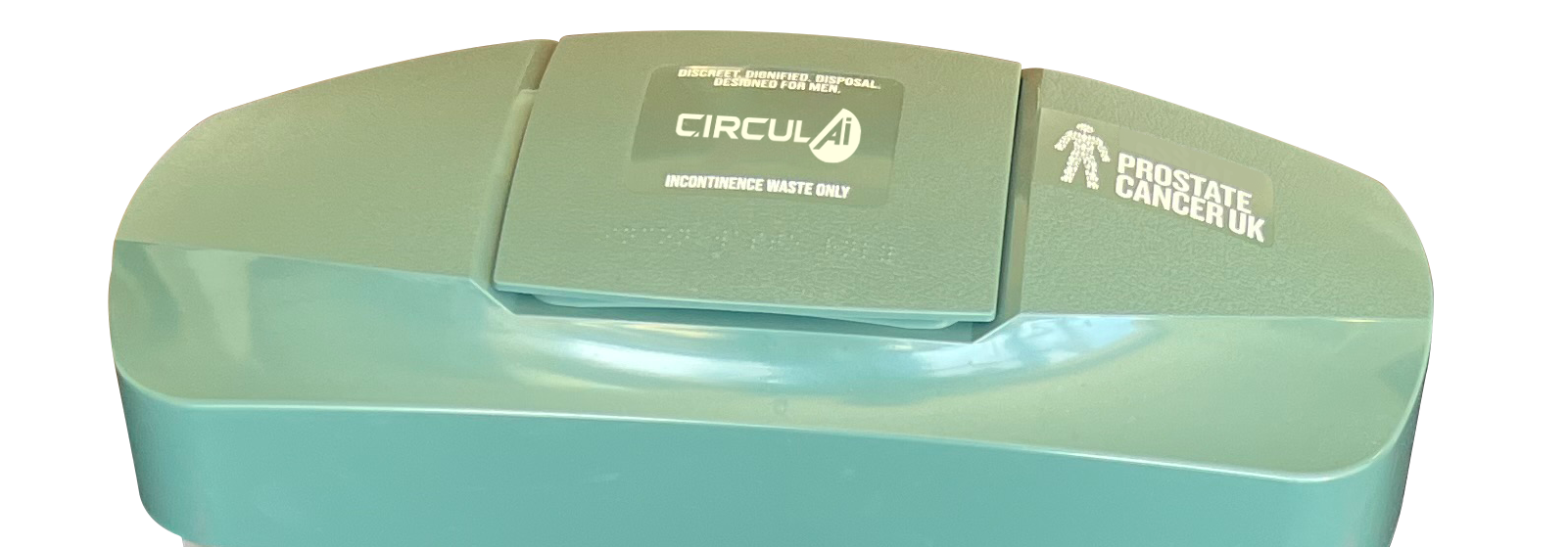
One in eight men will get prostate cancer. This alarming statistic highlights the importance of addressing male incontinence, a common but often overlooked issue. Despite the lack of UK legislation mandating incontinence services in male washrooms, the problem persists and continues to grow.

The Challenges Faced

Many men suffer in silence, facing embarrassment and discomfort due to inadequate facilities. Recent surveys reveal the extent of the problem:

  • Hygiene Bin Accessibility: Over a third of men (34%) struggle to find hygiene bins to dispose of incontinence products in public toilets.
  • Anxiety and Isolation: Nearly eight in ten men (78%) feel anxious about leaving home due to a lack of facilities, leading to increased social isolation.
  • Mental Health Impact: One in four men (28%) report feeling depressed about the deterioration of their lives, with this figure rising to 100% among men under 25 with the condition.
  • Reduced Social Interaction: Over a third (38%) of men leave home less often, exacerbating feelings of isolation.
  • Prevalence in Older Men: One in three men over 65 will experience urinary incontinence issues.

Circulai’s Commitment

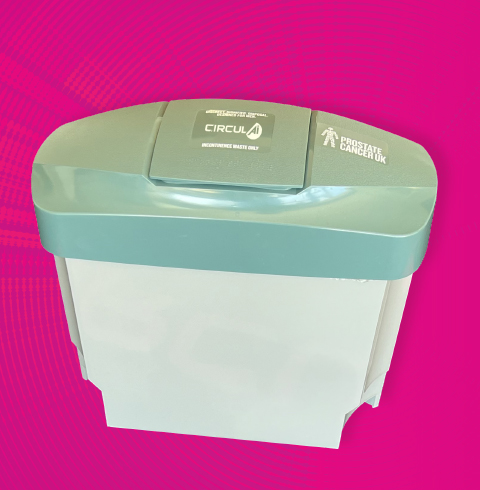
Circulai is committed to addressing this critical issue by providing a comprehensive male incontinence service nationally. We believe in the importance of offering proper facilities in male washrooms to help alleviate the challenges men face with incontinence. Our service aims to promote dignity, reduce anxiety, and improve the quality of life for men across the UK.

Call to Action

We urge all companies to take a proactive stance in supporting male incontinence services in public washrooms. By doing so, we can help reduce the stigma, improve mental health, and enhance social inclusion for those affected.

Meet Aida: Our Innovative Waste Management Assistant!

We’re thrilled to introduce you to Aida, the groundbreaking waste management assistant redefining the industry landscape! As the first of her kind in the sector, Aida is set to revolutionize the way businesses manage waste.

Here’s what makes Aida truly unique:

Cutting-Edge Technology: Aida harnesses the latest advancements in artificial intelligence and chatbot technology to deliver unparalleled waste management assistance. Say hello to a smarter, more efficient way of handling your waste-related queries and tasks.

Tailored Solutions: No two businesses are alike, and neither are their waste management needs. Aida understands this and provides tailored solutions designed to address your specific challenges and requirements, ensuring maximum effectiveness and efficiency.

Proactive Support: Gone are the days of reactive waste management. With Aida by your side, you’ll receive proactive support and timely alerts to help you stay ahead of the curve and avoid potential issues before they arise.

Continuous Innovation: We’re committed to continuous innovation and improvement, and Aida is no exception. As the first of her kind in the sector, Aida will continue to evolve and adapt to meet the changing needs of our customers, ensuring that you always have access to the best possible waste management solutions.

Experience the future of waste management with Aida by your side. Get started today and discover the difference she can make for your business! Aida appears on bottom right-hand side of every page on the website.

Bin There, Done That: Tech Revolutionises UK Waste Management.

The global waste crisis is undeniable. With over 2 billion tonnes generated annually and associated costs reaching nearly £300 billion, traditional waste management approaches are struggling to keep pace. Here in the UK, we face similar challenges, yet a glimmer of hope shines through – innovation. By leveraging cutting-edge technology, the waste management and recycling sector is poised for a transformation, paving the way for a more sustainable future.

A Global Industry on the Rise

The global waste management industry is a behemoth, valued at an estimated $1.6 trillion in 2020 and projected to reach $2.5 trillion by 2030. This 68.75% growth is fuelled by factors like improved waste collection in developing economies (expected to reach 50% by 2050 according to the World Bank) and the sheer volume of waste generated across the globe.

The UK itself is a significant player, with Veolia Environmental Services UK and Biffa Group reporting annual revenues of £3.3 billion and £1.4 billion respectively for the year ending 2022.

However, the current system isn’t without its flaws. The global waste trade, while seemingly efficient, often masks a darker reality. Statistics show a significant decline in plastic waste exports since China’s “National Sword” policy – down from over 15 million tonnes in 2010 to around 4.45 million tonnes in 2021. This highlights the need for a domestic solution and a shift towards a more circular economy.

The UK’s Waste Management Landscape

Within the UK, waste management is segmented into three main categories: municipal solid waste (household waste), industrial waste, and hazardous waste. Each requires specialised handling and disposal methods. While collection rates are high – with Biffa alone collecting over 4 million metric tonnes in 2022 – disposal methods vary greatly. Recycling rates in the UK, although improving, still show disparity between regions, with Wales leading the way at 57% compared to England’s 44%. This gap presents an opportunity for significant improvement.

Tech-Powered Solutions: A Global Revolution

The tide is turning. Around the world, waste companies are embracing technology to revolutionise waste management. San Francisco’s Recology utilises robotic sorting with AI and sensors to achieve an impressive 87% recycling rate. South Korea’s Songdo City leverages an underground pneumatic waste system for efficient transportation and sorting. Waste Management, a North American giant, employs “Smart Bins” with sensors and AI-powered recycling programmes to incentivise participation and improve sorting efficiency.

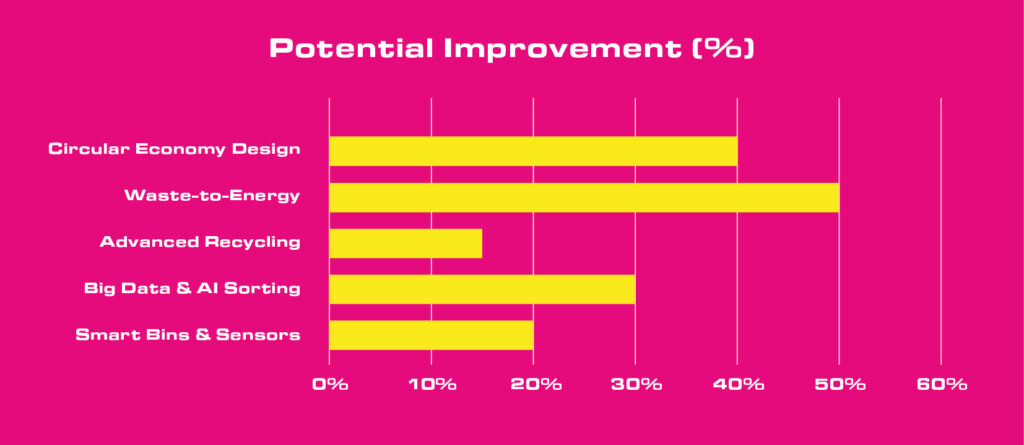
The graph below displays the potential improvement percentage for various waste management technologies. It reveals that Waste-to-Energy technologies have the greatest potential impact, with a possible improvement of up to 50%. Circular Economy Design and Big Data & AI Sorting are predicted to achieve improvements between 30-40%, while Smart Bins & Sensors and Advanced Recycling could potentially reach 20-30% improvement.


The UK’s Technological Opportunity

The UK has a unique chance to become a global leader in sustainable waste management. Here’s how technology can empower this transformation:

Investing in Cutting-Edge Technologies: Early adoption of advanced sorting, recycling, and waste-to-energy plants will position UK companies at the forefront of the industry. This could potentially lead to a market share increase of 10-15% in the next five years.

Data-Driven Decision Making: Utilising big data and analytics can optimise operations and track progress towards sustainability goals (with a target of achieving a 10% annual reduction in landfill waste).

Building a Collaborative Ecosystem: Collaboration with government agencies to create policy frameworks that incentivise innovation through tax breaks or subsidies (potentially reaching a 20-25% cost reduction) and promoting responsible practices is crucial.

Empowering Informed Consumers: Public awareness campaigns that target a 20% increase in knowledge about responsible waste disposal habits and the importance of recycling are essential.

Leading the Charge: From Waste Collectors to Waste Warriors

By embracing innovation, fostering partnerships, and educating the public, UK waste management companies have the power to transform themselves from waste collectors into environmental stewards, leading the charge towards a cleaner and more sustainable future for the UK. This is not just about managing waste – it’s about reimagining the entire waste management lifecycle, creating a greener future for generations to come.

The Opportunity is Now: A Call to Action for UK Businesses

At Circulai, we believe that technology is the key to unlocking a future where waste becomes a resource, not a burden. Our solutions are uniquely crafted with AI and machine learning to optimise waste collection, sorting, and processing thereby laying the foundation for a transformative business model tailored to market segments facing the challenge of balancing ethical practices with profitability.

Contact us to learn how Circulai is harnessing technology to revolutionize the waste management sector in the UK. Together, let’s build a cleaner, more sustainable future.

Brace yourselves for a seismic shift in the world of waste management as Circulai emerges from the shadows, led by a trio of visionaries ready to disrupt the status quo.

Simon Sharp, previously the Managing Director of Greenzone respectively, join forces alongside the enigmatic businessman Dave Swallow (MD Swallow Construction) to spearhead a movement that promises to redefine the very essence of waste management.

Circulai isn’t just another waste company; it’s a rebellion against the mundane, a rebellion against complacency. With Simon, and Dave at the helm, Circulai isn’t just about managing waste; it’s about reshaping our relationship with the planet. It’s about harnessing the power of knowledge, innovation, education and sustainability to create a future where waste isn’t just managed; it’s transformed into a valuable resource utilising the power of hybrid AI and data analytics to support our efforts.

Simon Sharp agrees, his passion for sustainability evident in every word. “At Circulai, we’re not just talking about change; we’re making it happen. We’re harnessing the power of innovation to turn waste management on its head and create a world where waste is a thing of the past.”

Dave Swallow, the visionary strategist, smiles knowingly. “This isn’t just business; it’s personal. It’s about leaving a legacy that goes beyond profits and spreadsheets. It’s about creating a world we’re proud to pass on to future generations.”

Circulai isn’t just inviting you to join a company; it’s inviting you to join a movement. A movement that’s daring, audacious, and unapologetically bold. So, are you ready to join the revolution?

Please contact Melissa Jane at Press@circulai.co.uk] or media inquiries.

Circulai is proud to announce the addition of James Ward to its Board of Directors. With a rich background in data strategy, privacy law, and authorship, James brings unparalleled expertise to our mission of transforming waste management.

Based at the University of Oxford Internet Institute, James serves as the founder and managing partner of Ward PLLC, a distinguished consultancy specializing in data strategy and privacy law. His advisory role extends to guiding clients on the creation and marketing of valuable data products, navigating complex privacy regulations such as GDPR, HIPAA, and CCPA, and meeting the evolving demands of cybersecurity.

James’s innovative solutions to data-based challenges have propelled him to the forefront of the industry, establishing robust privacy programs and leading teams to develop new data products generating millions in revenue annually. His engagement in Web3 projects, including DeFi and token development, further showcases his commitment to innovation and cutting-edge technologies.

Notably, James serves as the chief data strategist and privacy officer for several publicly-traded companies, including FIS Global, EY, and Duff & Phelps, reflecting his trusted reputation within the corporate sphere. His bestselling book, “Data Leverage: Unlocking the Surprising Growth Potential of Data Partnerships,” has solidified his status as a thought leader in the field, earning him frequent interviews in prestigious publications worldwide.

Certified as a Fellow in Information Privacy and holding certifications in European and United States data security and privacy law, James’s credentials are matched only by his dedication to excellence. Prior to his role at Ward PLLC, he accrued over a decade of experience as a seasoned litigator, specialising in high-stakes litigation encompassing intellectual property, financial services, and consumer class actions.

A graduate of the University of Notre Dame Law School and Northwestern University, James Ward’s arrival marks an exciting new chapter in Circulai’s journey towards sustainable waste management. We look forward to leveraging his expertise as we continue to pioneer innovative solutions for a brighter, more sustainable future.

Circulai proudly welcomes Kishan Changlani as our new Sustainability Director. With a wealth of experience in advisory and consultancy roles, Kishan has played a pivotal role in advancing sustainable practices, fostering growth, and spearheading the development of circular solutions.

Kishan’s expertise spans various research domains, including AI for Climate, Earth Observation Systems, and Biodiversity Loss. He actively contributes to academia by delivering lectures and workshops at prestigious UK universities such as the London School of Economics, King’s College London, and University College London (UCL), among others. He aims to equip the next generation with the skills needed for a green economy.

Having collaborated with esteemed organisations like the United Nations Environment Programme (UNEP) and the United Nations Framework Convention on Climate Change (UNFCCC), Kishan is recognised globally for his impactful climate action initiatives. His work with local governments further solidifies his position as a leader in sustainable endeavours.

Furthermore, Kishan’s expertise has led him to speak at prestigious platforms such as TEDx events, where he shares his insights on sustainability and innovation. He has also been appointed as a Delegate and Speaker at the Conference of the Parties (COP), showcasing his influence and leadership in international climate negotiations.

With Kishan Changlani on board, Circulai is poised to accelerate its sustainability initiatives, driving growth and development within our business. We eagerly anticipate harnessing his expertise to propel us towards a more sustainable future. Welcome aboard, Kishan.

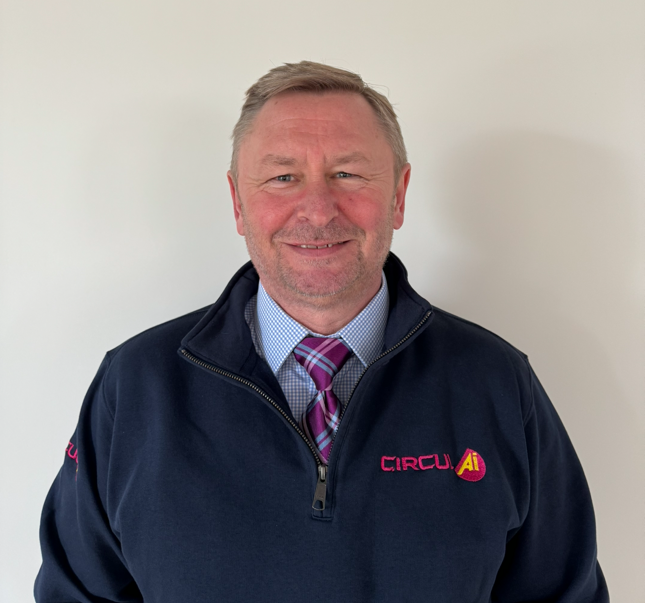
Introducing Simon Sharp, an esteemed leader with over 30 years of experience in the Waste Management industry.

Throughout his career, Simon has demonstrated a remarkable ability to translate ideas into sustainable business operations, showcasing dynamic leadership and exceptional interpersonal skills.

From his role as a founding member of Greenzone Facilities Management, where he steered the company to an impressive multi million pound turnover, to his tenure at Biffa Waste Services, where he managed extensive national sales teams, Simon has consistently delivered impactful results.

A passion for waste management innovation is matched only by his commitment to family and interests in Formula 1, golf, and culinary exploration. With Simon on board, Circulai is poised for unparalleled growth and sustainability leadership.